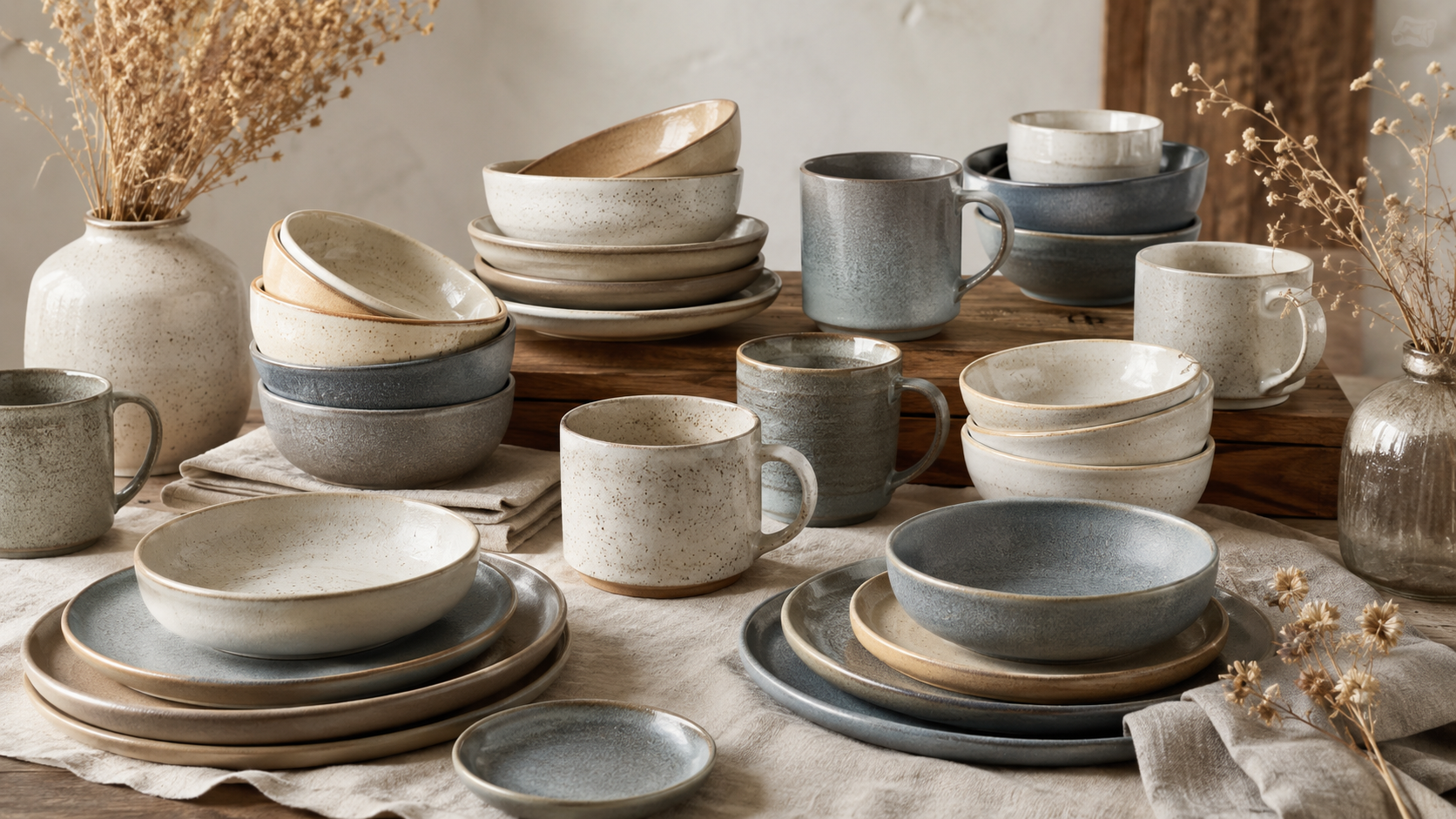
Mix-and-match tableware can give a retailer more visual interest than a single matching set, but it only works when the range has clear rules. Buyers need a shared material, size logic and color relationship before they add variation.
Choose one common thread
Start with one stable element: a body color, rim profile, glaze family or shape language. Then add controlled variation through texture, a secondary color or a limited motif. If every item changes at once, the assortment becomes difficult to merchandise and harder to replenish.
Assign a role to every SKU
List core dinnerware, serving pieces, giftable accents and add-on mugs separately. A buyer can then see which items create the main sale and which items lift basket value. Avoid adding a shape only because it looks attractive in isolation.
Confirm practical compatibility
Ask for dimensions, nesting behavior, finish samples and packaging assumptions. Food-contact, testing and market-specific requirements need independent verification; do not assume that a decorative ceramic item is appropriate for every use.
Internal starting points
Use the live ceramic tableware category to review existing styles, then compare related ceramic mugs. For a custom assortment discussion, send the intended channel and reference set through Contact.
Next step
Build a one-page range map before asking for quotation: item role, size, finish, quantity direction and packaging requirement. It is more useful than a folder of unrelated product images.