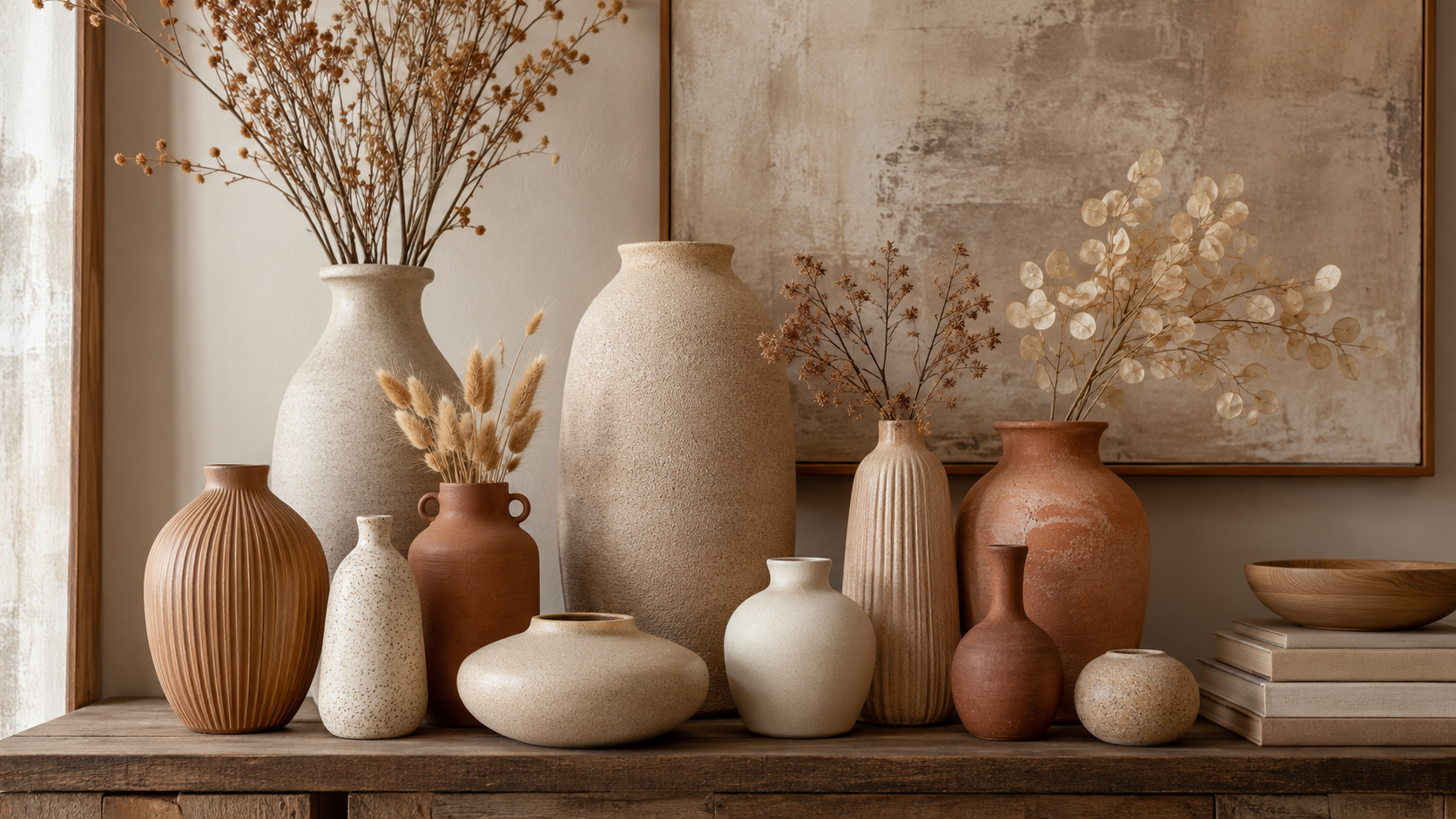
Warm, layered interiors give retailers a useful assortment question: which vase roles should sit together on a shelf without becoming a collection of near-duplicates? The answer is not to buy every finish in one shape. Build a small system of silhouettes, heights and surface treatments that can be displayed together and sold separately.
Start with display roles, not individual vases
Specify a tall anchor, a medium-volume shape, a small accent and, where useful, a low vessel. This creates a natural shelf rhythm and helps a buyer compare a range by function instead of by a long list of similar SKUs. Keep the first presentation focused enough that a retailer can photograph it as one story.
Build a finish family
Use a concise finish brief: for example, an earthy neutral base, one tactile surface and one controlled accent. Ask for real glaze samples before approving names such as sand, taupe, clay or stone. Screen images cannot confirm firing variation, gloss level or texture.
Questions to include in the buyer brief
- Which vase sizes are intended for shelf, table and floor display?
- Which finishes must coordinate, and which may vary naturally?
- Will stems, dried botanicals or empty-vessel styling drive the retail presentation?
- What packaging and carton approach protects the tallest shape?
Use real category links
Review the current ceramic vase collection alongside the full product catalog before requesting a quote. For a new assortment, send reference images and a target sales channel through the contact page.
Next step
Do not treat a mood-board direction as a finished specification. Turn it into an approved shape list, sample set and packaging brief before committing to a collection.